
Choosing the best keyword research tool can feel overwhelming when almost every SEO platform promises accurate search volume, better keyword opportunities, and smarter insights. With so many options available, it can be difficult to know which one is actually worth using. The reality is simple: no single keyword research tool is the perfect fit for every marketer.
Certain platforms are strengths in competitive research, while others are good at being beginner friendly, paid campaigns, or low competition opportunities. Choosing the right option would depend on the desired functionality and the amount of data to be processed.
We’ve narrowed down the list of available keyword research tools for 2026 to five of the best, based on the quality of their keyword data, research capabilities, ease of use, competitive intelligence, pricing, and the most suitable use cases.
Best Keyword Research Tools in 2026 at a Glance
| Keyword Research Tool | Best For | Free Access | Key Strength |
| Semrush | Best Overall | Limited | Complete keyword and competitor research |
| Ahrefs | Competitor Research | Limited | Traffic potential and SERP analysis |
| Google Keyword Planner | Free/PPC Research | Yes | Google keyword and advertising data |
| Ubersuggest | Beginners | Limited | Simple keyword research workflow |
| LowFruits | Low-Competition Keywords | Limited | Finding weaker SERP opportunities |
Google Keyword Planner is accessed through a Google Ads account.
How We Compared the Best Keyword Research Tools
A good SEO keyword tool should provide more than just a long list of related phrases. It should guide you on which keywords to go for.
Some of the most crucial features for this comparison are keyword discovery, search-volume data, difficulty or competition insights, search intent, competitor research, SERP analysis, ease of use and overall value.
We also took into account the fact that each platform is best suited to. The requirements of an agency running multiple sites could be radically different to the needs of a small business owner who is considering keywords for a few blog posts.
1. Semrush — Best Overall Keyword Research Tool
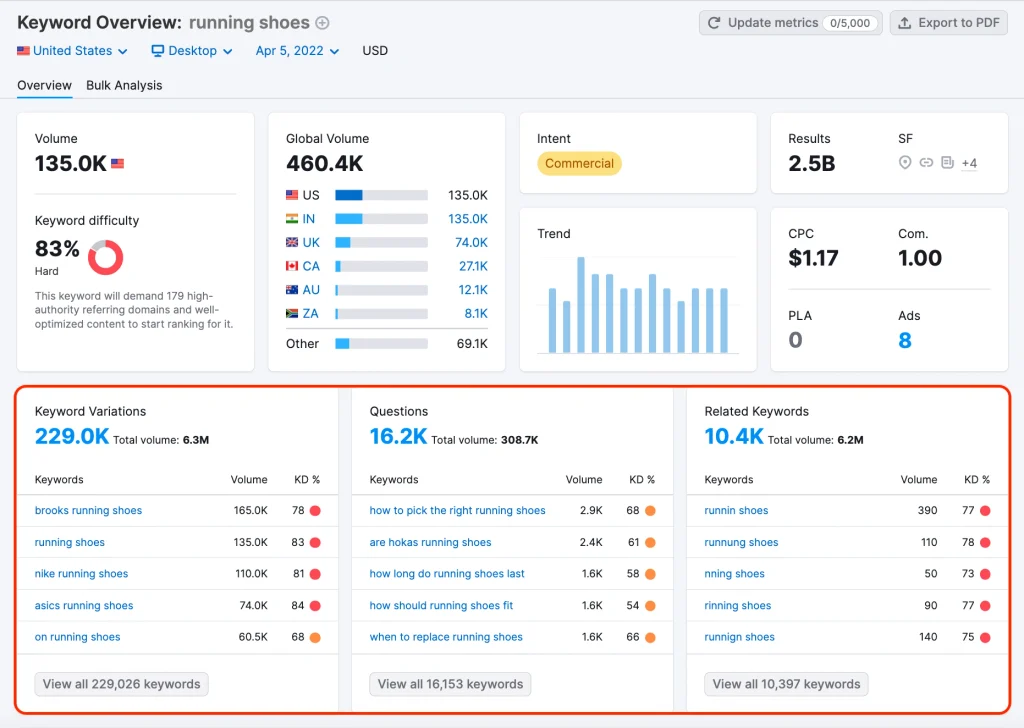
If you’re a company or marketer looking for keyword research and more in-depth SEO/competitor intelligence, then Semrush is our top pick.
It has over 27.3 billion keywords via its Keyword Magic Tool. Users can use one seed phrase to find other phrases and categorize them into topic lists. Filters are provided on questions, keyword difficulty, SERP features, and more.
This is especially helpful when creating content clusters, which is why Semrush is an excellent tool to use. You don’t just search for the one keyword and then that’s it, but you can search for related questions, and subtopics that you could use for a full SEO campaign.
Semrush also includes keyword research alongside competitor analysis, position tracking, website audit, and AI-search monitoring. The current SEO plan is $139/month when billed monthly, with higher tiers offering more capabilities and limits.
Pros: Large keyword database, advanced filtering, competitor insights, keyword grouping, and extensive SEO features.
Cons: The number of tools can feel overwhelming for beginners, and paid plans may be expensive for someone who only needs occasional keyword research.
Best for: SEO experts, agencies, growing businesses, and content teams seeking a comprehensive solution.
Our Verdict
Semrush offers the best overall tool in this comparison if you need one that can perform keyword discovery, competitor research, ranking, site analysis, and more.
2. Ahrefs — Best for Competitor and SERP Research
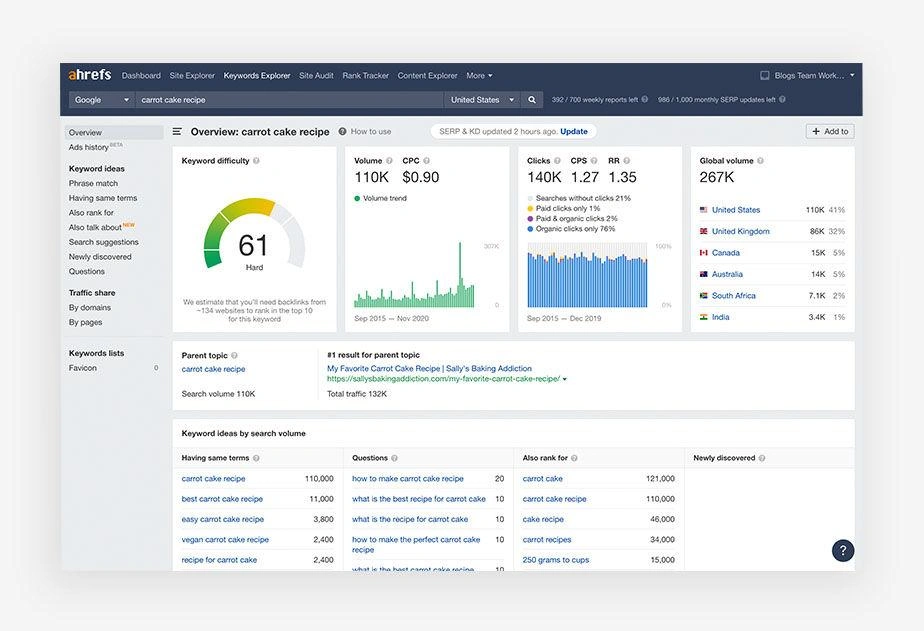
Ahrefs is a great tool to use for keyword research beyond just the monthly search volume.
The Keyword Difficulty, search volume, Traffic Potential, Parent Topic, SERP information and keyword suggestions are all offered by the Keyword Explorer. As of now, AHrefs has 28.7 billion filtered keywords in its index, with 2.7 billion of them being for the United States.
Traffic Potential is one of the most useful metrics that can be used. It does not just show the search volume for a single keyword, but it basically approximates the traffic that the number one page with that keyword receives from all of the keywords that it’s ranking for. This can help to broaden the scope of a topic’s possibilities.
Another useful feature of Parent Topic is that it can be used to identify that more than one keyword is relevant to the same page, and not to multiple pages.
Currently, Ahrefs has a Starter Plan that includes “limited” access to Keywords Explorer, and plans further up the scale offer significantly higher keyword limits and more features in the SEO section.
Pros: Strong competitor analysis, useful SERP data, Traffic Potential, Parent Topic, and extensive keyword data.
Cons: Full functionality can become expensive, and some advanced data requires higher-tier plans.
Best for: SEO professionals, content strategists, and marketers who rely heavily on competitor and SERP analysis.
Our Verdict
Use Ahrefs not just for the keywords, but for understanding how other pages rank and to assess the overall traffic potential of a topic.
3. Google Keyword Planner — Best Free Option
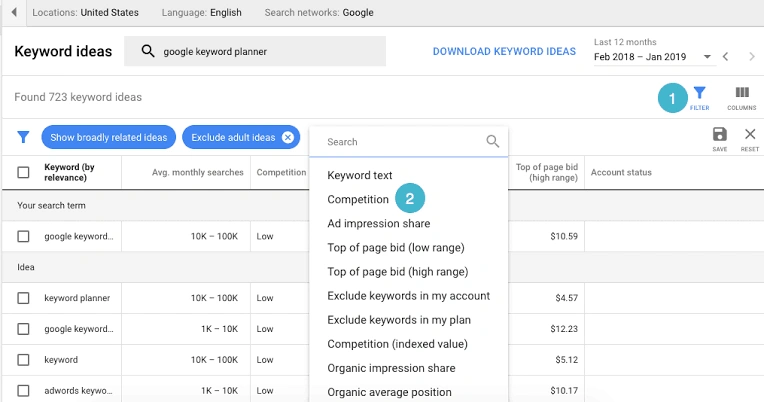
For businesses looking to get keyword information without the commitment of a separate SEO platform, Google Keyword Planner is one of the most helpful tools to get started.
The tool can find new ideas for keywords using products, services, phrases or websites. It also offers marketers search trends and bid estimates which help them understand the commercial advertising environment of a keyword.
The greatest advantage of it is its tie-in with Google Ads. When you’re planning your site with paid search in mind as well as organic search, Keyword Planner can help you pick which (commercial) keywords you’ll want to focus on and how much you’ll need to spend on ads.
It is necessary to know what it is for; however, there is a need to understand its purpose. Google’s Keyword Planner is not made for organic SEO purposes, and therefore the competition data is not for organic SEO ranking difficulty, it is for advertising campaigns.
That’s not as in-depth as you’ll find with the dedicated SEO tools for organic competition.
Pros: No dedicated paid SEO subscription required, useful keyword ideas, search trends, geographic targeting, and PPC bid information.
Cons: Designed primarily for Google Ads, limited organic competitor analysis, and no traditional organic Keyword Difficulty score.
Best for: Small businesses, PPC marketers, beginners, and anyone looking for a practical starting point for keyword research.
Our Verdict
Google Keyword Planner is a great place to start, even if you don’t have a lot of budget to work with, or paid search is an element of your marketing. However, for more in-depth organic SEO research, it’s best to use it in conjunction with a dedicated SEO platform.
4. Ubersuggest — Best for Beginners
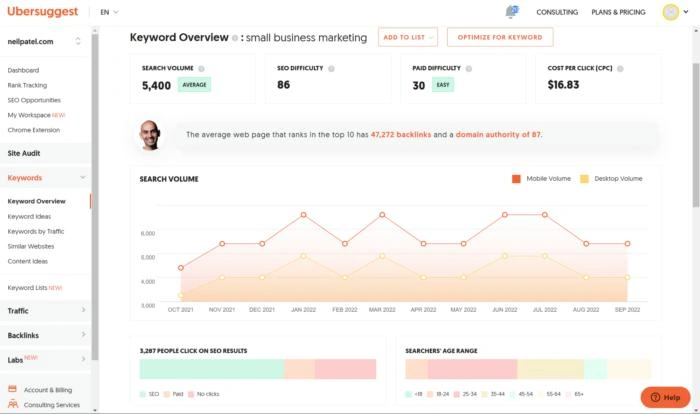
Ubersuggest is a convenient solution for those who wish to conduct SEO keyword research without diving into the world of enterprise-level systems right away.
It provides an easy to use interface to get from seed keywords to keyword ideas, content ideas and competitor data. This is particularly beneficial for bloggers, small business owners and marketers who are still growing their SEO knowledge.
Instead of the hundreds of advanced reports at the start of the page, Ubersuggest concentrates on offering common SEO research jobs to be a bit more approachable.
This simplicity is the limitation. For larger campaigns or experienced SEO teams that are doing in-depth competitor analysis, they might want something like Semrush or Ahrefs for the more in-depth information.
Pros: Beginner-friendly interface, straightforward research process, useful keyword ideas, and accessible SEO insights.
Cons: Less depth than more advanced platforms for large-scale competitor and keyword analysis.
Best for: Beginners, bloggers, freelancers, and smaller businesses looking for an approachable keyword research workflow.
Our Verdict
In situations where usability is more important than the most extensive data set, Ubersuggest makes sense. It can provide an easier way for novices to grasp the opportunities available in the keywords they are targeting without complicating the research process.
5. LowFruits — Best for Finding Low-Competition Keywords
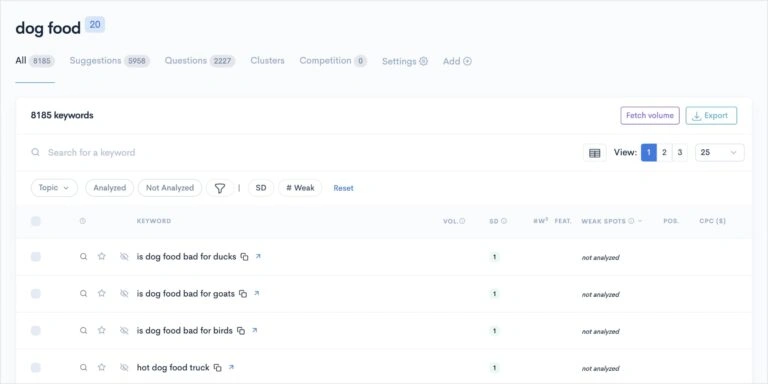
It’s easy to find keywords that have search volume. It’s more difficult to find real opportunities that a smaller site might be able to compete for.
LowFruits does things differently. It isn’t meant to be able to outdo all of the SEO tools; it’s meant to be used to find long-tail keywords and to see if a search result may be weaker.
That’s why it is quite intriguing for newer websites and content publishers. A keyword that has great search volume might be tempting, but if the first page is packed with authoritative sites, that’s one that could be hard to rank for.
LowFruits can assist in the research process transition to possibilities where the SERP may be more attainable.
Pros: Focus on lower-competition opportunities, useful for long-tail research, and particularly relevant for content-led websites.
Cons: It is more specialized than Semrush or Ahrefs and may not replace a complete SEO platform for agencies or advanced teams.
Best for: Bloggers, niche websites, smaller businesses, and newer sites searching for attainable organic opportunities.
Our Verdict
LowFruits is worth considering when your priority is not simply finding the highest-volume keywords but identifying topics where your website may have a more realistic opportunity to compete.
Which Keyword Research Tool Should You Choose?
There are several different keyword research tools that you can use which will depend on your needs and experience and budget.
Opt for Semrush when you’re looking for a comprehensive suite of keyword research, competitor research, SEO management and search visibility features.
If competitor research, backlinks, SERP analysis, Traffic Potential, or understanding ranking pages are all important aspects of your strategy, then you’ll want to choose Ahrefs.
If you’re looking for a free place to start, or you’d like to get keyword ideas that are closely related to Google Ads, then use Google Keyword Planner.
Opt for Ubersuggest if you are new to SEO and want to have a less complicated SEO process.
If you’re looking for opportunities that may not have the same level of competition, you should go with LowFruits.
Researching keywords is just the start. To convert that data into pages that satisfy search intent, establish topical relevance and meet business goals, a wider approach is needed. Partnering with an SEO expert from the Best Digital Marketing Agency for your objectives to help link keyword research to content, search visibility and customer acquisition.
Free vs. Paid Keyword Research Tools: Which Is Better?
For a small content project or a new website, free keyword research tools are sufficient for simple keyword research. They can provide insights into ideas, search trends and can kick off content planning.
Organic difficulty metrics, larger data sets, historical data, advanced filters, SERP data and analysis, and scalable workflows are where paid tools become more valuable.
The better question, then, is not just one of “Is a tool free?”. It’s whether or not the info it gives you is enough for you to make confident SEO decisions.
For businesses that are committed to investing in their organic content, there may be a time when they can also leverage professional tools with a well-planned SEO Services strategy that creates optimized pages, leverages the keyword opportunities, and produces quantifiable results.
Are Keyword Research Tools 100% Accurate?
No keyword research tool can be viewed as a source of absolutely accurate search-volume data.
Various platforms employ varying sets of data, models, frequency of updates, and approaches to estimating metrics. That’s why the same word may have varying search volume or keyword difficulty in different SEO tools.
These indicators are not facts, but are used as a decision making instrument. Other factors that should guide keyword selection include search intent, SERP quality, topical relevance, business value, and the ability to compete.
Multiple signals are often better than a single signal because it is more useful to compare several signals than just choosing one because of its high reported search volume.
Frequently Asked Questions
Which keyword research tool is the best in 2026?
In 2026, Semrush is among the top keyword research tools, providing keyword discovery, keyword difficulty analysis, competitor research and advanced SEO features in a single platform.
Which keyword research tool is the best free one?
Google Keyword Planner is a good free tool for keywords idea generation, search trends and keyword research for Google Ads.
Is Google Keyword Planner good for SEO?
Yes. Google Keyword Planner can help you find keywords and gauge demand, but its competition metric is geared toward the advertiser, not difficulty for organic search.
Is Semrush better than Ahrefs for keyword research?
This will depend on your requirements. For keyword research and all-in-one SEO, Semrush is your best choice, and for competitor and SERP analysis, Ahrefs is the better option.
Can I do keyword research for free?
Yes. There are many tools like Google Keyword Planner that can help you find keyword ideas and search trends without having to subscribe to a dedicated SEO service.
Why do keyword research tools show different search volumes?
The tools for finding keywords vary in their data sources and estimation techniques and therefore results of searches for the same keyword can differ between tools.
Final Verdict
There is no right or wrong keyword research platform; it all depends on the goal, experience, and SEO needs. For 2026, Semrush stands out as the best overall option for its powerful keyword discovery, advanced filtering, competitor insights, and broader SEO capabilities. Ahrefs is great for competitor and SERP research, and Google Keyword Planner continues to be a good free tool. If you are a beginner, Ubersuggest is a good choice and LowFruits can assist you in discovering some lesser competitive keywords. In the end, the keyword research tool that helps you make better SEO decisions, create better content and drive meaningful organic growth is the best keyword research tool.